
Poor posture habits can place unnecessary pressure on the lower spine. The Alexander Technique helps people become aware of these patterns and improve coordination in everyday activities.
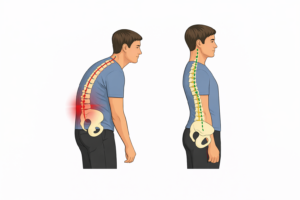
Poor posture habits can compress the lower spine and contribute to ongoing discomfort.
Lower back pain is often blamed on weak muscles, poor chairs, or aging. While these factors can sometimes contribute, many cases of ongoing discomfort are connected with habitual patterns of posture and movement that place unnecessary pressure on the spine.
Many people first learn about the Alexander Technique when looking for ways to improve posture and reduce strain. The Alexander Technique looks at posture differently from most conventional approaches. Instead of treating posture as a position to hold, it examines how the whole body works together during everyday activities such as sitting, standing, and walking.
Posture Is Not a Fixed Position
People are often told to “sit up straight” or “pull their shoulders back.” While this advice may seem helpful, it frequently leads to stiffness and tension.
When people attempt to hold themselves in a rigid posture, they often tighten their neck and compress their lower back. This effort can actually increase the strain placed on the spine.
You can explore more about posture and coordination on the page about
Habitual Patterns
Posture habits develop gradually over time. A person may slump while working at a computer, tighten the lower back when standing, or brace the body when concentrating.
Because these responses occur repeatedly, they often become automatic.
The Alexander Technique helps people recognize these patterns and gradually change them.
You can read more about this relationship on the page about pain and the Alexander Technique.
A More Balanced Approach
Instead of forcing posture into a particular shape, the Alexander Technique encourages a more balanced coordination between the head, neck, and spine.
When the neck is relatively free and the head balances easily, the spine tends to lengthen naturally. This allows the body’s structure to provide support without excessive muscular effort.
Over time this improved coordination can reduce the strain that contributes to lower back discomfort.
Final Paragraph
The Alexander Technique offers a practical way to recognize and change posture habits that contribute to lower back pain. By improving awareness and coordination in everyday movements, many people find that strain on the back is reduced and movement becomes easier and more comfortable.